Marketing is often seen in its final form, but the story is usually much richer when you trace it back to the person and moment that set the idea in motion.
Marketers’ Mind is a conversation series with the people shaping brands, influencing culture and navigating an ever-evolving marketing landscape. Through candid conversations, we look beyond the work itself to explore the perspectives, experiences and decisions that shape the people behind it.
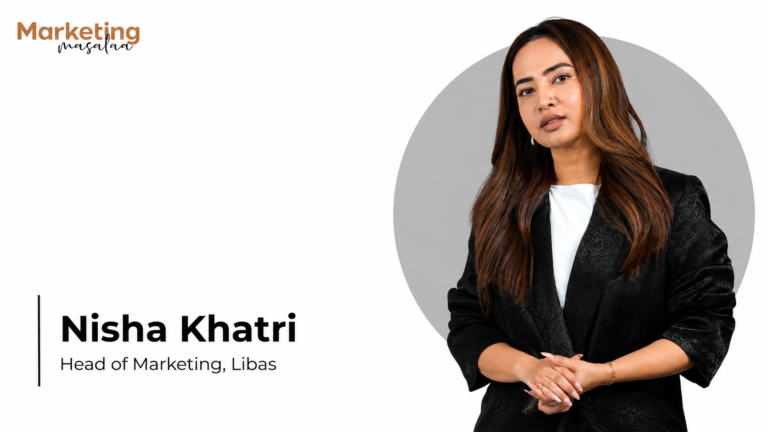
In conversation with Editorials Network, Nisha Khatri, Head of Marketing at Libas, talks about the changing place of Indian fashion in the lives of modern women. As Libas looks to move ethnic wear beyond occasion dressing and into the everyday, she shares how the brand is staying close to a consumer whose world and wardrobe is constantly evolving. The conversation explores what it takes to remain culturally relevant while staying clear about who you are as a brand and why the growing influence of micro-creators is reshaping the way brands build trust.
Libas is working to shift the perception of Indian wear from something reserved for specific occasions to something women can wear every day. From a marketing perspective, how do you change a cultural perception like that?
Honestly, it’s much easier than it looks because women already operate in those spaces. As a young, independent woman, you’re not just going to work. You’re attending a friend’s roka or a Rakhi function, going to a wedding, having lunch with friends and going on vacations.
We already know the spaces where different women exist and operate. As a brand, you already have the love of the customer. All we have to do is be available with the right offerings for those spaces.
Fashion marketing today is increasingly about becoming part of culture. How does Libas define cultural relevance and build it into its marketing?
We are all nothing but an extension of how culture plays out and fashion has always played such an important part in it. That’s our job as marketers and as a fashion brand we have to be very aware of how things are changing.
It’s not just about fashion trends. It’s about what people are consuming in terms of music, movies and content. What’s happening politically, what kind of movies are doing well, what people are watching on Netflix everything together shapes who you are and what you like to buy.
You’re inspired by food, locations, vacations, people and opinions. It’s a mix of everything. What makes you a sharper marketer is being very observant of your surroundings and how they are changing.
Influencer marketing has become almost non-negotiable for brands. With everyone working with creators, how do you make it feel authentic rather than just another paid product placement?
By working with authentic creators, we’ve worked with celebrities and macro creators and now you’re seeing this shift towards smaller and micro creators. There’s a reason for that. As a brand, you only have a certain amount of money to spend on marketing and you have to justify that investment.
What brands are seeing with smaller creators is that you don’t pay as much, but the engagement and interaction they have with their communities can be much stronger.
The reason is authenticity. If a friend tells you they’ve discovered a really nice sushi place in Bandra and that you have to go, you’re more likely to listen because you know they’re recommending it from a genuine place.
At a creator level, it’s similar. If you follow somebody who is smaller and they genuinely share something that worked for them, you are more likely to trust that recommendation. People are now so saturated with branded content that they just want things to feel authentic.
When choosing a creator, what is the one factor that matters most to Libas?
We are a fashion brand, so a certain kind of aesthetic and visual appeal matters. With micro-creators, honestly, we don’t overthink it too much. It has to visually look nice because we’re a fashion brand and the creator needs to understand content and have a certain level of aesthetics and editing. That’s it.
Brands are increasingly investing in intimate events and physical experiences. Why has this become so important?
Because that’s where you get to meet people. You get to talk to customers and engage with the community. That is important because otherwise, you become a faceless brand.
At an event, you’re not just seeing Libas as a logo. You’re meeting the people behind Libas the marketing team, the social media team and the people who are actually building the brand. That human connection matters.
Gen Z is becoming a major fashion consumer. How has Libas’ marketing and product approach changed to speak to them without losing the wider audience?
We are still operating as an Indian fashion brand. What we’re trying to do is make Indian fashion more wearable and accessible for them.
Gen Z consumers are going to school, college and entering their first jobs, so functionality becomes important. We keep all of that in mind while launching new styles.
We try to bring in a modern element while still staying true to our prints and our identity. The idea is that it can still be Indian fashion, but it can be more wearable.
When a brand works with celebrities, influencers and creators at the same time, how do you ensure they all tell one consistent story?
That is the brand’s job, it’s not the creator’s job. If I’m saying that we’re a brand that wants to speak to Gen Z in a certain way, everybody in my team needs to understand that. The communication has to be consistent across everyone we work with.
As a brand, you need to be sure about who you are. That’s where brands either lose or gain. Are you clear about who your audience is? Do you know how you want to show up for them? Is that communication consistent across retail, online, marketplaces and everywhere you sell?
We are very sure of who we are and that allows us to be very clear about what we’re selling and how we show up.
Consumers see hundreds of fashion brands on Instagram every day. What makes someone stop scrolling and actually remember Libas?
I think it’s the quality of our garments, the colours and the way we shoot our content. We are very visually appealing and very modern. We make sure our styling is modern too.
For example, you will never see us shooting a festive campaign in a palace just because it’s festive. Who actually goes to a palace for a Diwali party?
We want to show things as they happen today. We show modern settings and people celebrating in ways that feel relatable.
We don’t want to show an idea of India that is 10 or 20 years old. We want to show the modern Indian woman and the way she lives today.