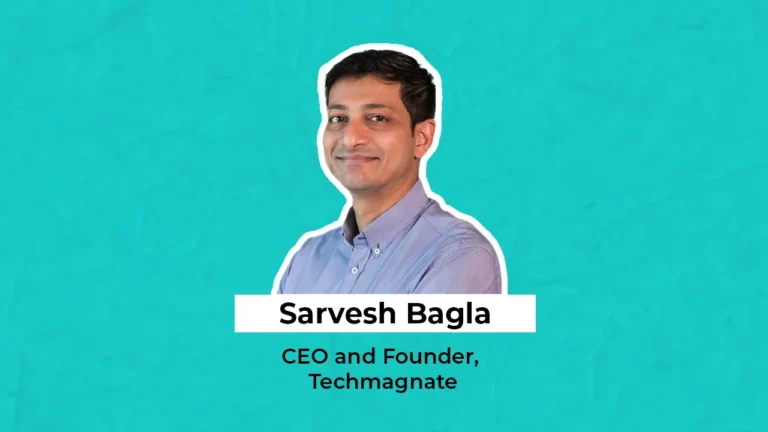
By Sarvesh Bagla, CEO & Founder, Techmagnate
The digital revolution has fundamentally transformed how India’s BFSI (Banking, Financial Services, and Insurance) sector operates. Once reliant on traditional marketing and brick-and-mortar branches, these institutions are now navigating a rapidly shifting landscape—driven by changing consumer behavior, rapid fintech growth, and a heightened reliance on digital services.
At the center of this transformation is a growing imperative: to build a strong, organic digital marketing strategy—not just to survive but to thrive in 2025 and beyond.
The Rise of Digital-First Customers
The rapid adoption of digital banking and mobile apps has redefined how customers interact with financial services. Indian consumers today—especially younger, digitally native users—expect speed, convenience, and seamless online experiences.
At the same time, fintech startups are disrupting traditional BFSI models with personalized services, lower operational costs, and user-centric digital platforms. Their success lies in their agility, tech-first mindset, and data-driven solutions that speak directly to evolving customer needs.
Traditional BFSI institutions, in contrast, face the challenge of scaling their digital efforts while balancing legacy systems, high operational costs, and increased competition.
The Paid Media Trap
In recent years, BFSI companies have been pouring money into digital advertising. Digital ad budgets have grown by 20–30% annually, and impressions surged by 40% in 2023 compared to 2022 (Source: TAM AdEx Report).
Yet, the return on investment from paid campaigns often falls short.
- In the insurance sector, the average paid cost per lead (CPL) is around ₹400, while organic CPL is just ₹25.
- In securities, paid CPL can reach ₹550, compared to just ₹10 for organic.
High costs and low conversion ratios make heavy reliance on paid media unsustainable—especially when customers increasingly skip ads altogether. Research shows that 70–80% of users ignore paid ads in favor of organic search results, which are perceived as more credible and trustworthy—an essential factor when dealing with financial decisions.
Why Organic Strategy Is the Future
Organic search is now the biggest driver of website traffic, contributing over 53% of total visits (BrightEdge). It’s also where the most meaningful engagement happens. Users who arrive via organic channels are often further along in their decision-making journey, making them more likely to convert—especially for high-consideration products like loans, insurance, or investment services.
Top organic rankings translate to real business value:
- Better visibility = higher trust
- Higher trust = better conversions
- Better conversions = lower customer acquisition cost
And unlike paid campaigns, which stop delivering as soon as budgets dry up, organic strategies continue to drive value over time.
Reinvesting in Sustainable Growth
A robust organic presence reduces dependence on paid media, freeing up marketing budgets that can instead be used to improve digital infrastructure, enhance user experience, or innovate on products and services.
This reinvestment drives a virtuous cycle: better products and experiences drive more engagement, which leads to stronger customer retention—and, ultimately, to sustainable growth.
In the ideal scenario, a strong organic roadmap can even support institutions in meeting their Annual Operating Plan (AOP) goals more efficiently.
How BFSI Brands Can Win Organically
1. Local & Hyperlocal SEO: Meeting Customers Where They Are
Local SEO is a powerful tool for BFSI players looking to reach and convert customers in specific geographies.
Searches with “near me” grew by 16.81% between 2022 and 2023, indicating a rising demand for nearby financial solutions. Whether it’s a bank branch, insurance office, or NBFC, being visible in local search results helps BFSI brands connect with customers looking for solutions in real time.
2. Prioritize Organic App Marketing
With 200 million+ mobile banking users in India (2024), largely driven by a digital-first youth demographic, the battle for app installs and engagement is heating up.
However, with the app space becoming increasingly saturated, BFSI apps must rise above the noise. A strong organic app marketing strategy—including App Store Optimization (ASO), content marketing, and in-app user engagement—can drastically improve visibility and retention.
For instance, one leading Indian NBFC saw a 144% increase in app visitors and 122% increase in installs within a year after implementing a comprehensive organic app marketing plan.
Sometimes, it pays to let experienced digital partners lead the way.
Final Thoughts: The Road Ahead
As fintechs continue to reshape the financial landscape with agile, digital-first solutions, traditional BFSI players must adapt or risk falling behind. The future belongs to those who build resilient, cost-effective, and long-term digital strategies.
Organic digital marketing is no longer just a nice-to-have—it’s a business imperative.
By embracing SEO, content, local marketing, and organic app strategies, India’s BFSI sector can reduce acquisition costs, improve user trust, and drive sustainable, high-quality growth.
It’s time to stop chasing leads and start building trust. The digital future is already here—and it’s organic.
This article is penned by Sarvesh Bagla, CEO and Founder of Techmagnate.
Disclaimer: The views expressed are the author’s own and do not necessarily reflect those of the publication.