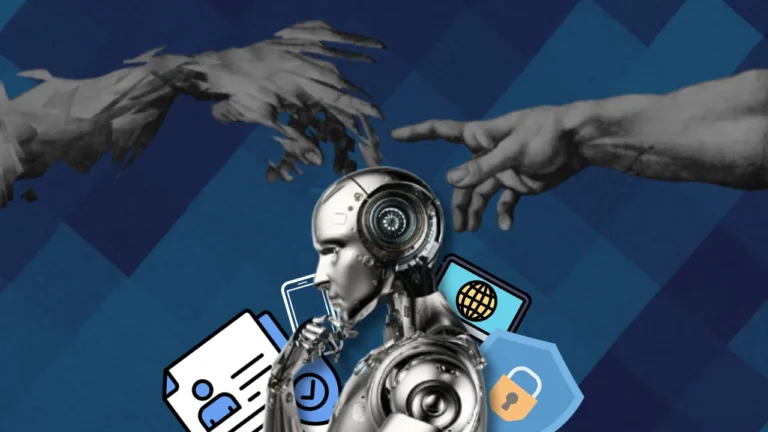
As our reliance on AI grows, so does the need to understand the hidden costs behind its convenience—and the urgent importance of safeguarding our personal data in this fast-evolving digital world.
Take Spike Jonze’s film Her, where Theodore Twombly forms a deep bond with Samantha, an AI operating system that learns and adapts based on interactions with him and many others. While today’s AI tools like ChatGPT don’t profess love, they do learn from every word we type. We share our thoughts, questions, creative ideas, and often sensitive information with these digital assistants. But what happens to that data? And how can we protect our privacy and intellectual property from becoming lost fragments in vast servers?

Joaquin Phoenix spins romantically with a phone in ‘Her’
The appeal of generative AI is undeniable—these tools serve as helpful collaborators, brainstorming partners, and tireless content creators. Yet this collaboration hinges on data—often our own—which raises complex questions about privacy, content ownership, and the subtle trade-offs we make every time we ask AI to simplify a complex topic or summarize a chaotic message.

xAI Data Centre in Memphis
Understanding the Data Behind AI

Large Language Models (LLMs) like ChatGPT are trained on enormous datasets and continue to learn from user interactions. When you engage with AI, your prompts and queries contribute to refining its knowledge and improving its responses. While this process isn’t malicious, it does carry important privacy implications and concerns about the integrity of your content.
The Complexities of AI Learning
The data relationship with AI isn’t as simple as users providing information and companies consuming it. AI models don’t “remember” conversations like humans do, but your inputs influence the statistical patterns that shape their outputs. The concern isn’t just about specific data being repeated, but how aggregated inputs impact the AI’s future responses.
Here are some key points to consider:
- Varying Sensitivity: Not all data is equal. Brainstorming ideas is very different from sharing confidential memos or private health details. Users must carefully weigh the sensitivity of the information they share with AI.
- The ‘Black Box’ Effect: The internal workings of LLMs can be opaque. It’s difficult to predict how certain inputs influence outputs or whether anonymized data might, in combination with other data, reveal sensitive information.
- Content Ownership: When AI helps generate text, images, or code, who owns the final output? Terms of service differ widely. Some platforms give users broad rights, while others retain rights to use generated content for training. This blurs the line between user input and AI-generated material, creating legal and ethical challenges still being worked out.

- The Implicit Data Exchange: Many AI tools are free or low-cost, relying on user interactions to improve models. Transparency and user control over how their data is used are crucial, especially when the data is sensitive or commercially valuable.
Strategies for Protecting Your Privacy with AI
Navigating AI’s privacy landscape requires more than basic caution—it calls for informed, intentional engagement:

- Exercise Informed Discretion: Always pause and assess how sensitive the information you plan to share is. For highly sensitive data, consider alternative methods or anonymize your inputs heavily before sharing.
- Read and Revisit Policies: Terms of service and privacy policies often include key details on data use and content ownership. These documents evolve, so regularly checking them helps you stay informed of your rights and options.
- Use Platform Controls: Many AI providers now offer options to exclude your interactions from training or to request data deletion. Use these features, but know their limits—data already processed might remain stored or used for safety monitoring.
- Anonymize Thoroughly: For sensitive tasks, removing or obscuring any identifiable information is vital. This means more than just changing names—it involves eliminating any details that could lead back to you or your organization.
- Opt for Enterprise Solutions When Necessary: Businesses dealing with proprietary or regulated data should consider enterprise-grade AI services, which often come with stricter privacy commitments and contractual protections.
- Choose Privacy-Focused AI Models: Some AI platforms prioritize privacy, including on-device AI that processes data locally, reducing external data transmission. Open-source models offer transparency but require technical know-how.
- Support Privacy-Preserving Technologies: Techniques like federated learning (training models without raw data leaving your device) and differential privacy (adding noise to protect individual data) are vital advancements. Choosing providers that invest in these methods encourages a more private AI ecosystem.
Looking Ahead
Using AI doesn’t have to mean sacrificing privacy. Instead, we should strive for a balanced relationship where innovation and privacy reinforce each other. Users need to become more digitally literate and mindful of what they share. Developers must adopt privacy-by-design principles and transparent practices. Policymakers should establish frameworks that protect users without hindering progress.
By understanding data ownership and consent in AI interactions, we can help shape a future where technology truly serves us—not the other way around. And if you’ve read this without rushing to ask an AI for a summary, congratulations—you’re already engaging with AI more thoughtfully.