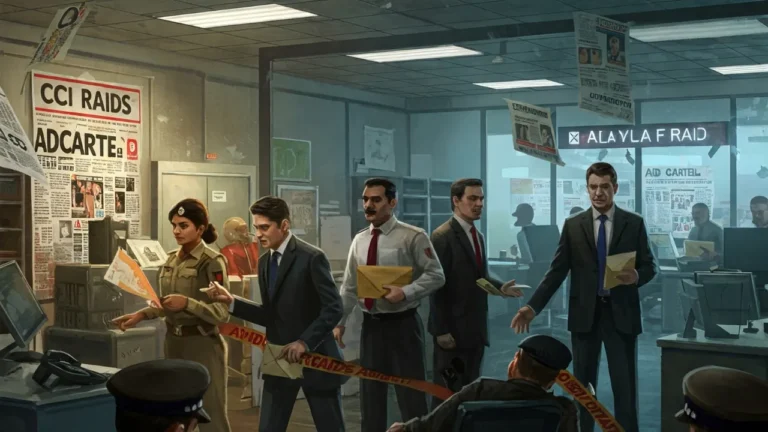
AI generated image
The world of Indian media buying—usually defined by slick presentations, layered jargon, and billion-rupee campaigns—was shaken to its core in March 2025. Instead of the usual high-stakes pitches or tech-led disruption, the drama unfolded with a very different kind of intervention: dawn raids by the Competition Commission of India (CCI).
Over two days, the watchdog’s officials swept through the offices of the country’s biggest media agencies and industry bodies. The raids marked a dramatic escalation in a long-brewing investigation into alleged anti-competitive practices—casting a harsh spotlight on pricing opacity, industry collusion, and the overall integrity of ad buying in India.
How Did It All Begin?
The roots of the investigation trace back to formal complaints and the CCI’s leniency programme—a mechanism that allows whistleblowers to come forward in exchange for reduced penalties.
According to insiders, Dentsu may have initiated the process in early 2024 by seeking leniency. Their disclosures reportedly pointed to collusive pricing and rebate structures, possibly coordinated through leading industry bodies like:
- Advertising Agencies Association of India (AAAI)
- Indian Broadcasting and Digital Foundation (IBDF)
- Indian Society of Advertisers (ISA)
An order from August 2024 allowed the CCI to expand its investigation into whether these associations’ guidelines, advisories, and agreements were restricting healthy competition.
The March 2025 Raids
On March 18 and 19, CCI officials entered offices in Mumbai, Delhi, and Gurugram, targeting:
- Global media agency giants: WPP’s GroupM, IPG, Publicis, Dentsu, Omnicom, Havas, Madison
- Key industry bodies: IBDF, AAAI, and ISA
The timing was notable—it came just before the Indian Premier League (IPL) season, a period that sees massive advertising spends. The message was clear: no agency, timing, or platform was off-limits.
Investigators seized documents, cloned hard drives, and reviewed communications in search of evidence of collusion, price-fixing, and bid rigging.
What’s Under Investigation?
The CCI is examining possible violations under Section 3 of the Competition Act, 2002, which prohibits anti-competitive agreements.
1. Price Fixing & Cartelisation
At the heart of the probe is the suspicion that major agencies, possibly in coordination with broadcasters, manipulated advertising rates and discount structures—especially for premium slots like prime-time TV and IPL packages.
These arrangements may have:
- Set artificial price floors
- Standardised opaque rebate models
- Limited rate competition between agencies and media owners
2. Bid Rigging
The CCI is also looking at whether agencies coordinated pitches—submitting cover bids or deciding in advance who would win certain client accounts. While some argue that advertising pitches don’t mirror public tenders, any such collusion could still fall foul of the law.
3. Anti-Competitive Industry Guidelines
Several specific documents are being scrutinised, including:
- ISA’s Model Agency Agreement (Aug 2023): May have limited scope for flexible agency-client negotiations.
- AAAI’s Media Agency Remuneration Guidelines (Aug 2023): Could be seen as setting minimum fees or commissions, discouraging price competition.
- IBDF’s Media Account Transition Advisory (Sept 2023): Restricted new agencies from offering discounted rates, even including indemnity clauses penalising undercutting—potentially a major red flag.
4. Lack of Transparency
A broader concern underlying the probe is the opaqueness in how media buying works—including:
- Complex rebate and Agency Volume Benefit (AVB) structures
- Undisclosed programmatic fees
- Lack of clarity on how much advertisers actually get for their money
The CCI is also reportedly expanding its lens to Big Tech players like Google and Meta to probe digital advertising practices.
Why This Matters: Implications for the Industry
For Advertisers:
- Transparency will be non-negotiable: Clients are expected to demand more disclosure on rebates, pricing, and digital fees.
- Tighter contracts and more audits: Expect stricter media contracts and detailed reporting requirements.
- Rethinking agency relationships: Some brands may move work in-house or look at smaller, independent agencies with transparent models.
- More competitive pitches: Guidelines restricting discounts or pricing terms could be sidelined, allowing more price-driven competition.
For Media Agencies:
- High financial stakes: If found guilty, penalties could reach 10% of average turnover or three times the profits from the affected period.
- Reputation at risk: Client trust is central, and the damage from allegations—regardless of outcome—could be long-lasting.
- Operating model shakeup: Agencies may need to change how they price, disclose rebates, and compete.
- Industry-wide paranoia: The leniency program creates a “prisoner’s dilemma” where partners may turn on each other to save themselves.
For Broadcasters & Platforms:
- Although not the prime targets, their role in any pricing collusion is under scrutiny.
- If advertisers push for more direct deals, broadcasters may need to offer increased pricing clarity.
For the Ad Industry at Large:
- This could be a watershed moment, sparking a reset of norms and expectations around ethics, fair play, and transparency.
- Calls for more self-regulation or even regulatory oversight could grow louder.
What Happens Next?
This is only the beginning. The CCI process is slow and detailed, often taking 1–2 years or more. Next steps could include:
- Analysis of seized data
- Summons to advertisers and platforms
- Hearings from accused parties
- A final ruling, which could either dismiss the charges or impose serious penalties and reforms
The role of the leniency applicant (allegedly Dentsu) will be key, as their cooperation could be central to building the case.
A Defining Moment for Indian Advertising
The CCI’s raids have triggered one of the most consequential investigations in the history of Indian advertising. What started as whispers about rebates and rates has exploded into a full-scale probe into the core mechanics of media trading.
If the outcome leads to greater transparency, fairer pricing, and more ethical practices, it could reshape the media buying landscape for the better. For marketers, this disruption may bring short-term uncertainty—but in the long run, it might just deliver the accountability the industry has long needed.