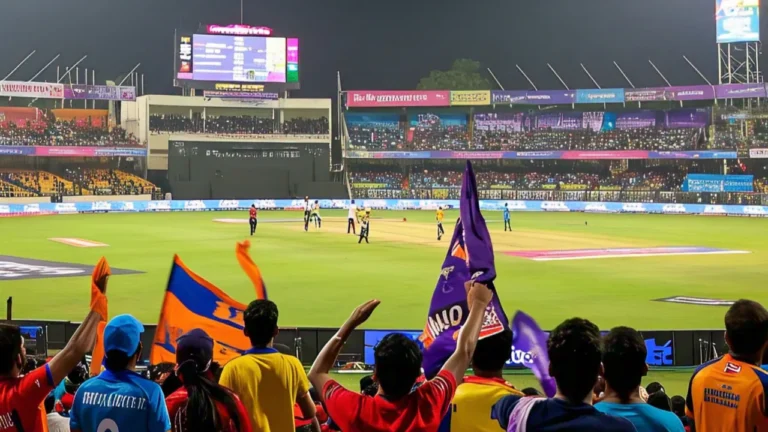
Every summer, like clockwork, the Indian Premier League (IPL) descends upon the nation—bringing with it a two-month carnival of cricket, celebrities, and commerce. More than just a sports league, the IPL has become a cultural phenomenon. For brands, it’s not merely an advertising opportunity—it’s a shot at cultural relevance, national visibility, and direct consumer engagement. But with ad spots running into crores and the media landscape more fragmented than ever, is the investment still worth it?
IPL: The Festival of Eyeballs
A 10-second ad spot during IPL prime time can cost upwards of ₹15 lakh. Sponsorship deals stretch into hundreds of crores. Despite these jaw-dropping figures, brands continue to pour money into IPL year after year. Why?
Because IPL is one of the rare media moments that can deliver both scale and spectacle. “Yes, it’s expensive,” says Pooja Dua, Senior Client Servicing Director at The Rabbit Hole, “but the demand justifies it. It’s where the whole country is watching.”
But mere reach is no longer the endgame. Rohit Sakunia, Founder and Director at ArtE Mediatech, sees the IPL as a cultural moment. “You’re not just buying impressions,” he says. “You’re buying emotional engagement. This is high-intent, high-energy viewership—and it lasts two months.”
From Visibility to Relevance
Today’s brands aren’t just looking to be seen—they want to be felt. IPL offers access to a national conversation that is vibrant, passionate, and loyal. That emotional backdrop makes it fertile ground for storytelling and consumer action.
But, as Dua cautions, the scale of IPL only works when it aligns with specific, measurable objectives. “Don’t buy IPL time just to build a brand or refresh an image,” she warns. “Use it when you have a sharp CTA—app installs, offer redemptions, or other actions you can track.”
Priyam Dadia, Head of BD, Media Sciences at Schbang, adds another layer: credibility. “The IPL isn’t just about reach anymore—it’s about being taken seriously,” she says. “Contextual in-game moments, like a 4 or a wicket, and smart brand integrations feel organic. That’s when brands become part of the game, not just noise during ad breaks.”
The “Halo Effect”—A Real, But Risky Advantage
Advertising during IPL sends a message: your brand is big-league material. This “halo effect” lends instant credibility. “If you’re on IPL, people assume you’re legit and financially sound,” says Dua. That’s especially valuable for newer brands or high-consideration categories like fintech and consumer tech.
But Dhiraj Gupta, Co-Founder and CTO of mFilterIt, tempers the excitement. “It’s not magic,” he says. “Without a smart strategy, IPL ads can become expensive wallpaper.” Gupta highlights a critical blind spot—mistaking impressions for impact. Without controls like frequency capping, ads can hit the same users repeatedly, causing fatigue instead of recall. Worse, some impressions may not reach real people at all, thanks to poor attribution and bot activity.
Can Smaller Brands Join the Party?
IPL’s cost structure clearly favours the giants. So, are smaller players locked out?
Not entirely. “You don’t need to be in the stadium to ride the wave,” says Sakunia. He points to creative guerrilla tactics—social media stunts, influencer-led content, or moment-driven memes—that let brands tap into IPL buzz without buying expensive ad spots.
Dua agrees: “A single, clever idea executed right—like sending fans to the stadium with viral signage—can outperform a polished but generic TVC.” The trick is staying close to the moment without trying to replicate the scale. This means experimenting with small, culturally resonant ideas instead of chasing massive visibility.
Rethinking Media: Integration Over Isolation
The IPL audience is no longer confined to a single screen. Viewers are multitasking, second-screening, and interacting with content in real time. This demands a shift in strategy.
“TV gives you reach, but not exclusivity,” says Sakunia. “The real engagement is happening across screens. Brands must lead with digital and layer TV into the mix.” Dadia recommends a funnel-based approach: drive awareness with IPL, then use digital tools like influencers and offers to convert interest into action.
Moment marketing also has a role to play—when done with restraint. “It’s tempting to chase every viral moment,” warns Dua. “But gimmicks don’t build brands. You need a strong core message that fits the cultural context.” Dream11’s creative approach—balancing humour, product messaging, and consistency—is cited as a best practice.
Metrics Matter: No More Vanity Numbers
Even the smartest campaign can fail if ads aren’t seen by real people. Gupta stresses the importance of verification and measurement. “Without it, you’re just wasting money on déjà vu—showing the same message to the same people or, worse, to bots.”
Effective IPL marketing demands robust ad tracking, frequency control, and outcome-based KPIs. Reach without verification is no longer acceptable. In a high-stakes environment like the IPL, performance transparency is everything.
Who Should Bet on IPL—and Who Shouldn’t?
Not every brand belongs in the IPL arena. As Sakunia puts it, “The IPL is great for mass-market brands seeking reach, recall, and impulse action—think FMCG, e-commerce, fintech.” Dua agrees, saying brands should come prepared with actionable goals, not vague intentions.
For B2B players or brands with long purchase cycles, the IPL may offer poor ROI. These brands should focus on sharper, more targeted digital strategies. That said, for new or credibility-hungry brands, the halo effect of IPL can compress decision-making and build trust quickly.
Conclusion: Strategy Over Spectacle
The IPL remains India’s most powerful advertising engine—but it’s not a silver bullet. Success today hinges not just on budget, but on brains: strategic alignment, integrated media planning, cultural intelligence, and verifiable outcomes.
For those who can’t afford to be on the field, proximity to the game—through clever digital stunts, influencer collaborations, and cultural agility—offers viable alternatives.
In the IPL arena, visibility alone doesn’t guarantee victory. Relevance—to the moment, the audience, and the brand’s goals—is what ultimately wins the game.